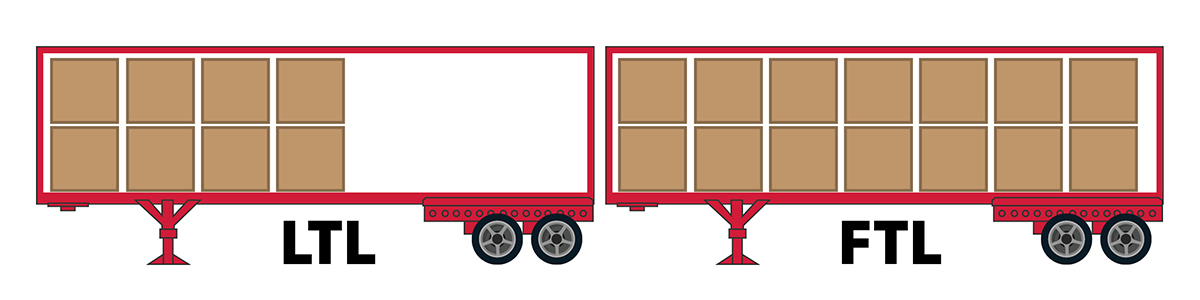
A guide for businesses comparing full truckload and LTL shipping based on freight size, handling, timing, cost, and delivery needs.
Choosing between full truckload vs LTL shipping is not simply a question of load size. The right mode also depends on handling, delivery commitments, and the level of schedule control your business needs.
Buchanan Logistics, Inc. helps businesses evaluate those factors and coordinate freight transportation services that fit the load.
Start With More Than Trailer Space
A smaller shipment may still justify full truckload shipping services when the freight is sensitive to handling, the delivery window is firm, or dedicated capacity provides better control. LTL can make more sense when the shipment uses only part of a trailer and can move within an LTL carrier network.
Five Factors to Compare
- Trailer space: Freight using most of a trailer may favor FTL. Smaller palletized shipments may fit LTL.
- Handling: FTL generally keeps freight on the same trailer. LTL may involve terminal transfers and additional handling.
- Timing: Firm appointments, production schedules, or customer commitments may make dedicated truckload service more practical.
- Freight characteristics: Fragile, high value, unusually shaped, or handling sensitive freight may benefit from fewer transfers.
- Total cost: Compare the service required, not only the starting rate. Special services, reclassification, and delivery requirements can affect the final LTL cost.

When to Use Full Truckload Shipping
Businesses often choose FTL for dedicated capacity, direct transportation, reduced handling, or tighter pickup and delivery control. It can also make sense when the operational cost of a delay outweighs the price difference.
For a broader look at FTL, visit the Truckload Freight Services Guide.
When LTL May Be the Better Fit
LTL freight shipping services can fit smaller palletized shipments that do not require an entire trailer and can move within the carrier's transit, handling, and delivery process.
Buchanan's LTL freight guide covers freight class, density, packaging, appointments, and other LTL planning details.
Do Not Choose a Mode on Rate Alone
A lower quote does not automatically mean a lower transportation cost. Consider what happens if freight needs extra handling, misses an appointment, or requires services that were not included in the original shipment details.
The better question is: Which mode gives this load the right balance of cost, handling, timing, and service?

How Buchanan Logistics Helps
Buchanan Logistics coordinates full truckload, LTL, dry van, flatbed, expedited, specialized, heavy haul, cross border, and managed transportation for business shippers. The team reviews shipment requirements, equipment needs, timing, and carrier options.
Review what to expect when working with Buchanan Logistics for more about the process.
Bring the Right Shipment Details
Before comparing FTL and LTL, gather the commodity, dimensions, weight, pallet count, dates, appointment requirements, equipment needs, and special handling instructions.
If your business is deciding between FTL and LTL transportation, request a freight rate from Buchanan Logistics. A logistics professional can review the load and help coordinate the right mode.
Resources
- Discover what sets us apart at The Buchanan Advantage.
- Explore our capabilities at Freight Capabilities.
- Check out our Buchanan Logistics Digital Brochure
Contact us now to get more information
or to get a rate quote for your next project.
Additional Freight Transports by Buchanan Logistics, Inc.
Understanding LTL Freight Costs | Dry Van Freight Shipping | Flatbed Freight Planning | Preparing Oversized Freight | Spot Freight vs. Dedicated Capacity | Inbound Freight Management | Freight Exception Management | Manufacturing Freight Logistics