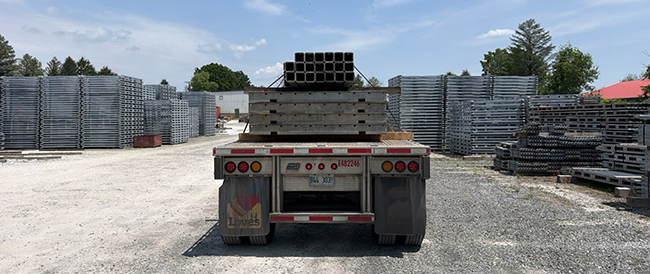
How firms can plan flatbed freight around dimensions, loading access, equipment type, securement needs, and delivery conditions.
Flatbed freight shipping services are often used when freight cannot be loaded into an enclosed trailer or needs side or overhead loading. Dimensions, weight, loading method, securement, protection, and site access all affect the equipment decision.
Buchanan Logistics, Inc. helps businesses review those details and coordinate flatbed and specialized freight transportation.
Start With Accurate Freight Dimensions
Length, width, height, and weight help determine whether a standard flatbed or another open deck trailer is appropriate. Measure the freight as it will ship, including packaging, skids, or frames.
Accurate dimensions also help identify loads that may need separate oversized or overweight planning.
Match Loading Access to the Trailer
Open deck freight transportation provides loading flexibility. Confirm how the freight will be placed on the trailer and removed at delivery.
- Rear loading: May work for freight handled by forklift or driven onto compatible equipment.
- Side loading: Can be useful for long materials, fabricated products, and freight that needs wider access.
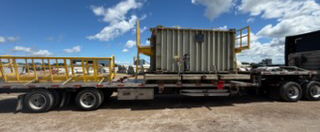
- Overhead loading: May be required when a crane is used to position machinery, equipment, or structural materials.
Both facilities should be able to support the planned loading method.
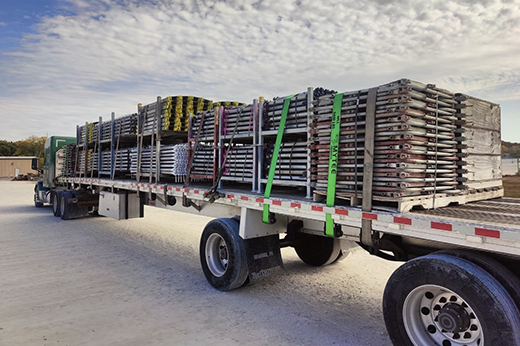
Flatbed, Step Deck, or Conestoga?
A standard flatbed provides an open, level deck. Step deck freight shipping can provide more vertical clearance, while Conestoga freight shipping can combine open deck loading access with a retractable covering system when appropriate.
Buchanan Logistics has access to flatbeds, drop decks, curtainsides, Conestoga trailers, removable goosenecks, and specialized equipment through its carrier network.
Plan for Securement and Protection
Open deck freight needs securement appropriate for the cargo and trailer. Freight description, weight, dimensions, and loading position should be clear before pickup.
Any protection from weather or road exposure should also be identified before booking.
Give the Logistics Team the Full Picture
Businesses asking how to plan a flatbed shipment should provide the information that can change equipment or carrier selection:
- Commodity and total shipment weight
- Length, width, and height of each major piece
- Loading and unloading method
- Pickup and delivery hours
- Jobsite, dock, or facility restrictions
- Protection and handling requirements
Buchanan Logistics reviews shipment requirements, equipment fit, timing, and qualified carrier options as part of its freight coordination process.
Coordinate Flatbed Freight With Buchanan Logistics
Buchanan Logistics coordinates flatbed, step deck, Conestoga, dry van, LTL, expedited, specialized, heavy haul, cross border, and managed transportation for businesses.
If your business needs flatbed transportation services, request a freight rate from Buchanan Logistics. Include dimensions, weight, loading requirements, and delivery details so the team can evaluate the load.
Resources
- Discover what sets us apart at The Buchanan Advantage.
- Explore our capabilities at Freight Capabilities.
- Check out our Buchanan Logistics Digital Brochure
Contact us now to get more information
or to get a rate quote for your next project.
Additional Freight Transports by Buchanan Logistics, Inc.
FTL vs. LTL Freight Shipping | Understanding LTL Freight Costs | Dry Van Freight Shipping | Preparing Oversized Freight | Spot Freight vs. Dedicated Capacity | Inbound Freight Management | Freight Exception Management | Manufacturing Freight Logistics